Showing posts with label Health and Safety. Show all posts

Drink fruit juice may help fight diseases

Fruit juice is linked with reduced risk of cancer, improved markers of heart health and cognitive decline, and increased antioxidant activity, according to the study. These protective health benefits are similar to those of whole fruits, said the study, conducted by researchers at the University of California. The researchers came to the conclusion after summarizing recent research data on the potential benefits of fruit juice. The review included a range of study types, from in vitro to clinical trials (60 papers total), all published in 2005 or later.

Among the fruit juices included in the review, consumption of apple, citrus, cranberry, grape, and pomegranate juices all showed beneficial effects. Markers of improved health ranged from reductions in urinary tract infections (cranberry) to improvements in age-related cognitive decline (grape and apple) to reduced risk of prostate (pomegranate) and respiratory and digestive (orange, grapefruit) cancers. Additionally, intake of all juices was linked to heightened antioxidant activity.

"While it is universally accepted that fruit and vegetable intake is protective, there is not a clear consensus about the benefits of consuming the juices that are extracted from them," said study lead author Dianne Hyson, PhD.

An analysis of the scientific evidence suggests that 100 percent fruit juices retain important bio-active components that may promote good health and aid in disease prevention.

Tips for a healthier you

Tips for a healthier you
The most difficult means to becoming healthy is having an appropriate diet from which the body benefits. For those who need the “not so complicated” nutritional advice, here are some tips to keep in mind and most importantly, to practice:

• You don’t need to deprive yourself of foods you love. Weight being an immediate parameter of wellness can be managed well if we just take in what we need and burn out whatever excess we may have taken in. At the very least, do not take for granted counting calories. Once you know your caloric needs, keep focused and do not exceed. If you exceed, the best thing to do is to increase physical activity.

• Keep watch of your caloric intake and note where most of the food calorie is coming from. Do not forget that fat has double the calories from protein or carbohydrates. So when you have two foods to choose from, choose one with much less calories from fats.

• As calorie counting is not the only means to achieve a healthier you when it comes to dieting, remember to eat foods with good amounts of fiber as it helps in heart and digestive health and blood sugar control. Dietary fiber is not only found in fruits and vegetables but also in other common Filipino foods like suman, bibingka, palitaw, puto, sapin-sapin, noodles (bihon, miswa and spaghetti), espasol and tupig.


• Speaking of heart health, emerging studies have shown that a supplementation of citrus extract and vitamin E may reduce levels of a marker of inflammation and promotes a healthy heart. Experts in the medical community view chronic inflammation as an equally or even more important marker of cardiovascular status than cholesterol or triglyceride levels.

• When it comes to eating patterns, many people who want to reduce weight/body fat has the mistaken notion that the longer gap between food intake, the better. This is wrong. Especially during waking hours, when our body has higher consumption for energy, we should appropriately space our food intake, so as not to create a state of temporary deficiency, a state which can even lead the body to produce more cholesterol than at any other time.

• When eating, small mouthfuls of food eaten slowly taste the best and gives the greatest pleasure. Remember not to use food as a means to handle any emotional ups and down. This will surely lead you to taking much more than you need.

Car pollution can damage brain

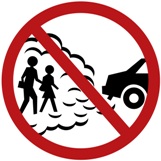
Car pollution can damage brainBeing exposed to highway pollution can cause brain damage in mice akin to memory loss and Alzheimer's disease, US researchers said Thursday. Scientists recreated the airborne pollutants that come from the burning of fossil fuels and the weathering of car parts and pavement, and exposed mice to the harsh air for 15 hours per week over 10 weeks.

The tiny air particles were "roughly one-thousandth the width of a human hair, and too small for car filtration systems to trap," but exerted massive damage on the brains of the exposed mice, said the study.

"You can't see them, but they are inhaled and have an effect on brain neurons that raises the possibility of long-term brain health consequences of freeway air," said senior author Caleb Finch of the University of Southern California.

Scientists found that the exposure resulted in "significant damage" to neurons involved in learning and memory, and they detected "signs of inflammation associated with premature aging and Alzheimer's disease."

The study is published in the peer-reviewed journal Environmental Health Perspectives. More research is necessary to determine if the same effects could be seen in humans. Of course this leads to the question, 'How can we protect urban dwellers from this type of toxicity?' And that's a huge unknown.

Problem with Chlorinated Water

Up to now, most public health experts still say that chlorination of water intended for human consumption is the cheapest, most effective and safest way to prevent life-threatening waterborne diseases such as cholera, typhoid fever and amebiasis. Indeed, chlorination of drinking water, which started early this century, has been regarded as one of the greatest advances in public health ever. Aside from destroying pathogens, chlorine has other benefits. It controls the growth of microorganisms, fungi and algae in water reservoirs and pipes, and in the process, it keeps water pipes patent. It likewise neutralizes the taste and odor of algae and decaying vegetation, making drinking water more palatable. It also eliminates obnoxious gases and compounds like ammonia and hydrogen sulfide from water.


But you are right. Drinking chlorinated water carries some health risks. Chlorination of drinking water has been previously regarded as completely safe, but recent scientific evidence proves otherwise. For example, some epidemiologic studies have indicated that long-term (i.e., 15 years or more) drinking of chlorinated water increases the risk of developing cancer of the colon and urinary bladder.

Actually, it is not chlorine, per se, that is hazardous to health. Rather, it is the by-products that are generated by the chlorination process. Chlorination by-products, often referred to as disinfection by-products (DPBs), are chemical substances that are produced when chlorine reacts with certain organic substances in water during the disinfection process. There are several kinds of these chemicals but the most studied are the trihalomethanes of which the most prevalent is chloroform. Other common DPBs are bromodichloromethane, chlorodibromomethane, bromoform, chloroacetic acid, trichloroacetic acid and dichloroacetonitrile.

In animal experiments that employ mostly rats and mice, chloroform has been shown to produce liver and kidney tumors; while the other DPBs have been variously associated with liver and kidney tumors and damage, tumors of the intestines, damage to the nervous system and some reproductive abnormalities.

Incidentally, the animal experiments on DPBs used doses that are much higher than those present in drinking water. Also, the mechanism of tumor formation in mice and rats are considerably different from that in humans. Nevertheless, the potential health hazard arising from DPBs in humans can’t simply be written off.

Despite the apparent health hazards that accompany chlorination of drinking water however, to discontinue this practice would be foolhardy, at least until an equally effective and cheap, yet safer, alternative process has been developed.

At present, there are substances and devices available in the market that can remove DPBs or the organic substances that serve as precursor of DPBs from chlorinated drinking water. One of the cheapest among these is activated carbon which removes chloroform and other DPBs. Thus, if you filter your tap water with a device or filter that contains activated carbon, this will surely reduce your health risks from DPBs.